
Advent Calendar Box Assembly: Buyer Checklist
Plan advent calendar box assembly with SKU mapping, product-fit checks, insertion instructions and quality control for bulk retail orders. Request a packaging review.

HC Packaging can help buyers plan the custom calendar box, compartment layout and protective inserts. Any finished-product insertion or kitting work must be evaluated and confirmed separately for the specific order.
For a supermarket chain, department store or beauty brand, an advent calendar can contain 12, 24 or more different items. The packaging has to look consistent at retail, but each product must also fit, stay in its intended position and arrive in good condition. An attractive empty box alone does not solve these challenges.
Why advent calendar assembly gets complicated
Several seemingly small problems can become expensive when a seasonal order involves thousands of finished calendars:
- Wrong products in numbered compartments: a variation in size or a similar-looking SKU can cause incorrect placement.
- Missing or duplicated items: multiple component suppliers make quantity reconciliation more important.
- Poor product fit: insufficient clearance, weak dividers or an unstable tray can lead to movement, crushing or difficult removal.
- Inconsistent presentation: drawers, doors, sleeves and gift items may be assembled or oriented differently.
- Missed retail deadlines: late-arriving products, rework or incomplete packing instructions can delay dispatch.
Six checks to make before bulk assembly
1. Build a product-to-compartment map
Start with one approved list of every product. For each numbered door or drawer, record its SKU, product name, quantity, maximum packed dimensions, weight and intended orientation. Add a reference photo, barcode or batch identification where appropriate. A 24-day calendar needs a clear answer for all 24 positions, including any repeated products or special gift days.
2. Engineer the box and insert around real products
Choose the box structure and insert material after reviewing product size, weight and fragility. Check cavity clearance, finger access, drawer movement, divider strength and whether an item may rub against a printed panel. A paperboard divider, protective tray or molded-fiber insert is not automatically suitable for every item: the choice should follow a fit review and an approved sample.
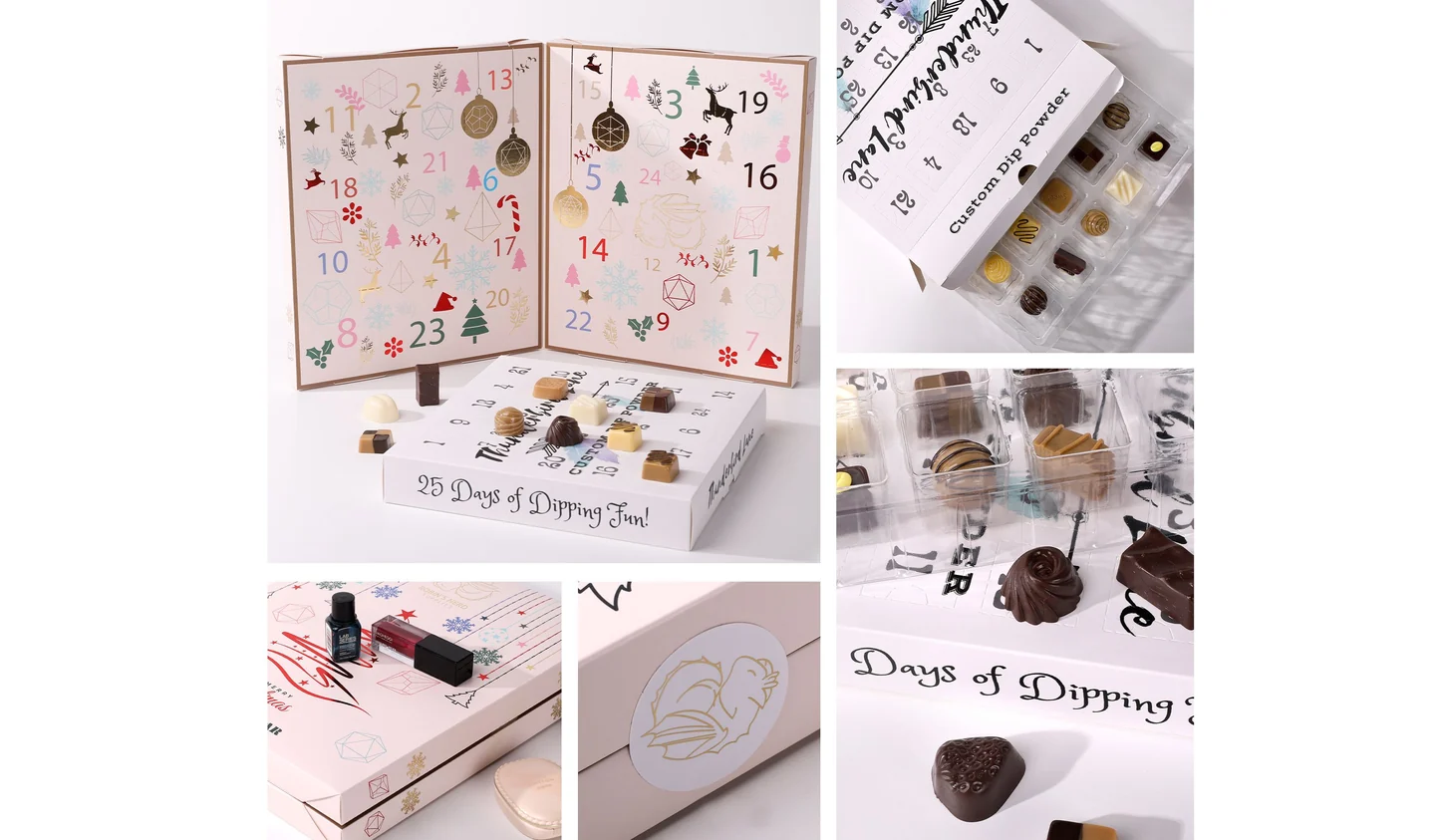
3. Approve a fully loaded sample
An empty structural sample checks shape and printing, but a loaded sample can reveal a different set of problems. Test opening and closing, product removal, the feel of the drawers or doors, and the stability of the products during handling. Where transit testing is required, agree the method and acceptance criteria before production. Keep an approved photographic reference for assembly teams and inspectors.

4. Write unambiguous insertion instructions
A practical work instruction should show the correct item, compartment number, orientation and sequence. It should also explain how to handle missing or damaged stock, how to distinguish similar SKUs and which version of the calendar is being packed. This is especially important when one promotion includes different assortments for different stores or markets.
5. Agree quality-control checkpoints
Consider checks at the first completed calendar, during assembly and at final packing. Depending on risk and order requirements, the checklist may cover the SKU count, compartment placement, insert position, product condition, print appearance, closure operation, finished weight and carton labeling. The sampling method and responsibility for each inspection should be specified in the project plan rather than assumed.
6. Plan cartons, components and dispatch together
Set the retail delivery date first, then work backward through sample approval, packaging production, arrival of the customer-supplied products, any insertion work, final inspection and freight. Confirm the finished calendar’s weight and dimensions before agreeing master-carton quantities. A production schedule for empty boxes is not the same as a confirmed delivery schedule for filled gift sets.
Where should final product insertion take place?
HC Packaging has a packaging manufacturing network in China and Vietnam. For some projects, coordinating packaging production and a separately agreed packing process near product supply may be practical. In other cases, buyers may prefer to arrange kitting closer to their destination market through their own fulfillment partner.
The decision depends on where the gift items originate, who owns the products, storage and handling requirements, customs arrangements, available capacity and the shipment deadline. Product insertion and finished-set assembly are not automatically included in a custom box quotation. The feasible location, service scope and responsibilities must be confirmed for each order.
How HC Packaging can support your calendar project
Our packaging team can review a proposed 12-day design, 24-day format or other custom layout, focusing on box construction, compartment dimensions, insert suitability, printing and sample approval. When buyers need filled calendars, we can review the additional packing brief and clarify which activities are within the agreed project scope before making a commitment.
What to include in your request for quotation
- Calendar format: 12-day, 24-day, 30-day or another configuration.
- Product list with SKU-to-door mapping, quantities, dimensions and weights.
- Product photos or physical samples, including any fragile or special-handling items.
- Expected calendar quantity and any assortment variations.
- Where the products are supplied from and where the finished calendars must arrive.
- Required retail launch date, inspection standard and any requested insertion work.
For custom advent calendar packaging on 24calendarbox.com, the standard minimum order quantity is 1,000 pieces. Any additional filling, kitting or local-assembly request requires separate feasibility and quotation confirmation. You can also review our packaging order process.
Frequently asked buyer questions
Can HC Packaging supply a fully filled advent calendar?
We can review your product-insertion brief and assess the feasibility of the requested work. Please do not assume that item sourcing, kitting, labeling or finished-set packing is included in a quotation for the empty custom calendar box.
What helps prevent missing items or incorrect compartments?
Use an approved numbered product map, a loaded reference sample, clear assembly instructions and agreed in-process and final checks. For multiple assortments, keep the version and carton identification unambiguous.
How early should a seasonal retail buyer start planning?
Start from the required in-store date and confirm the complete schedule with the suppliers involved. Packaging production, product sourcing, filling, inspection and international freight are separate planning steps; a standard box production lead time should not be presented as a guarantee for a filled calendar.
Discuss your advent calendar packaging and assembly plan
Share your design, product list, target quantity and delivery deadline with HC Packaging. We will review the packaging structure and identify the additional information needed to evaluate any product insertion or assembly requirements.